Teacher and paraprofessional communication can make or break a special education classroom. When it works, your students get the same strategies and the same expectations all day. When it breaks down, they notice right away.
Your para is your eyes and ears in and out of the classroom. Here is what I do to keep that partnership strong.
1. Put Your Expectations in a Binder
Paras are usually asked to come in for one or two days during pre-planning. That is when I meet with mine to go over expectations and student needs. The meeting lasts at least an hour, longer if a student has more needs or if I have a new para.
I also hand them a binder with all of that information. It covers roles and responsibilities, how I like to communicate, and my approach to behavior management. Type it up once and update it each year.
During the year, I send questions back to the binder. If the answer is in there, I either point them to it or give a quick answer and then point them to it for the details. I made it for them, and I want them to feel comfortable using it.
2. Set Clear Expectations Early
Do not wait for problems to come up. Spell out who does what, how you want to communicate, and how you handle behavior. Write it down so nobody has to guess or remember a conversation from August.
3. Build Mutual Respect from Day One
On the first day of school, I tell my students they give my paras the same respect they give me. All the time.
In self-contained classrooms here, paras take students to special area so teachers can have a planning period. I rely on my para to tell me exactly how behavior went. If a para thinks they will not be heard or supported, they leave out details. Then I do not know how to move forward.
So I always back my para up in front of students. If I disagree with something that was said or done, we talk about it privately. Those conversations never start or end with blame. My job is to give quick corrective feedback in the most positive way I can.
4. Keep Parent Communication Simple
Paras here are discouraged from speaking with parents because they can overshare confidential information without meaning to. I tell my paras to send parents to me with any concerns. That way, they do not have to remember what they can and cannot say, and the conversation is less awkward for everyone.
When parents get one consistent voice, trust builds faster.
5. Use “We” Language and Share Ownership
I tell my paras this is our classroom and our students. Then I back it up with action.
– Give them their own space
– Assign daily, weekly, and monthly tasks specific to each para (if you have more than one)
– Include them in classroom decisions
Their tasks include assigning weekly student jobs, collecting data on certain students, and running morning meeting. Phrases like “How can we best support…” keep the tone collaborative.
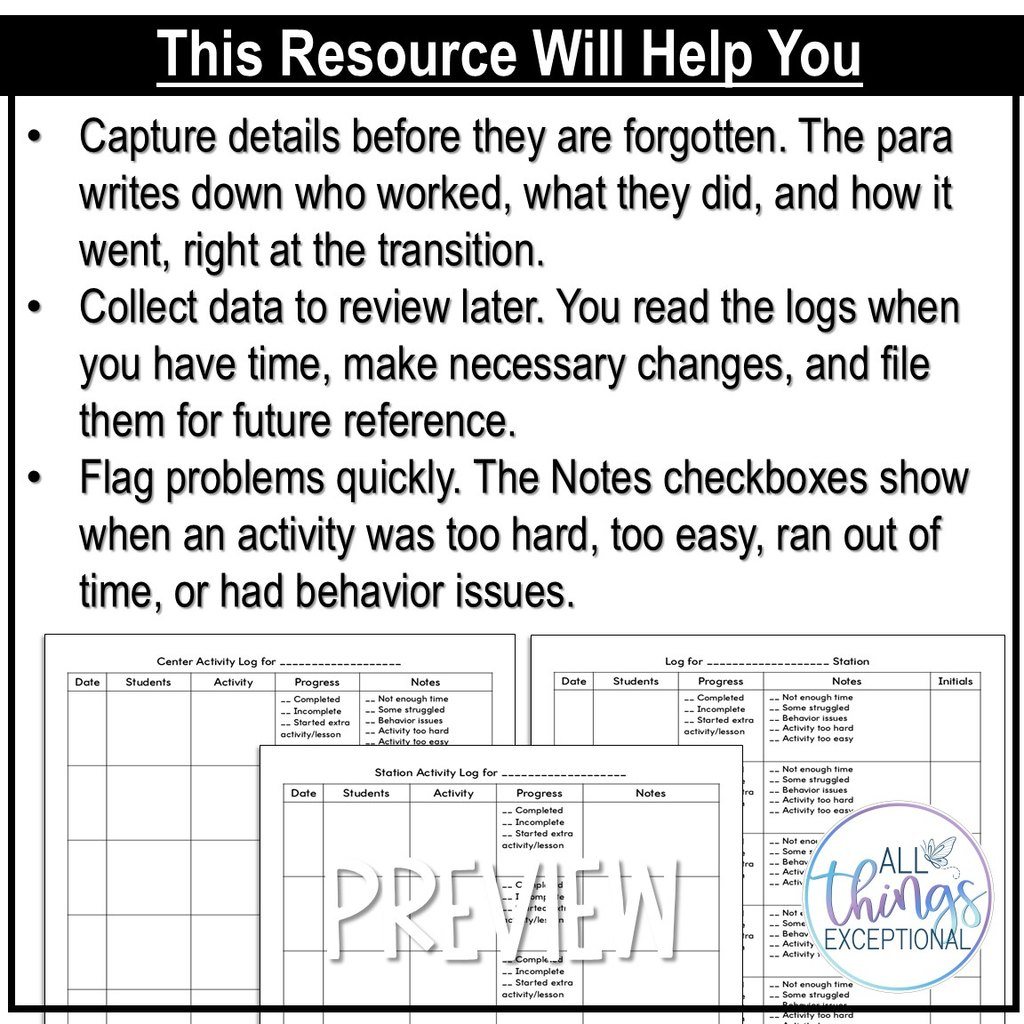
I use my Paraprofessional Activity Log and Feedback Forms for Stations and Centers to document what paras did with who throughout the day and how it went, because we do not always have a chance to catch up at the end of the day. This is also a great way to document behavior concerns during certain times of the day or activities.
6. Check In Often and Praise Specifically
We have weekly check-ins, and most are informal. Unless something serious comes up, we talk before students arrived or after school while cleaning up and prepping for the next day. My paras also have my cell number. We use the Remind app for texts, and I remind them not to use student names in messages.
To keep a record of what you discussed, my Staff Communication Log works well.
Praise works best when it is specific, brief, and on purpose. A simple thank you counts. So does “I love how you…” or “I noticed how you stayed calm while working with…”.
7. Working With a Challenging Paraprofessional
Not every para is easy to work with. Some push back, some check out, and some do things their own way. The same tools still apply, and they matter more here.
I once had a para who took every piece of feedback personally. She refused to work with certain students and questioned why she could not work with others. I didn’t want to make things worse, so I didn’t turn it into a debate. I told her I thought she worked much better with the group I had assigned her to. That kept the focus on what she did well instead of what she was resisting.
Here is what helps:
– Get expectations in writing. If roles and routines are typed up, you are pointing to a document instead of arguing about a conversation.
– Talk privately. Never correct a para in front of students.
– Start and end on a positive or neutral note. Keep feedback quick and corrective.
– Frame assignments around strengths. It’s easier for a para to hear where she does her best work than a list of what she should change.
– Use your check-ins. A small issue is easier to fix at a weekly check-in than three weeks later.
– Keep a written record. A communication log helps when a para disputes what was said.
Quick Recap
– Write it down
– Respect each other
– Check in weekly
– Play to strengths
Strong teacher and paraprofessional communication doesn’t require a big program. It takes written expectations, a plan for check-ins, and consistent follow-through. Start with your expectations and build from there.




No Comments