As a special education teacher, you know the challenges of creating a functional and organized classroom, especially when space is limited, which often is applicable to us. Balancing the need for various learning stations, sensory areas, and storage can be overwhelming.
Here are five practical solutions to help you make the most of your small special education classroom and keep it organized and functional.
1. Multi-Use Furniture
In a small classroom, every piece of furniture needs to earn its keep. Multi-use furniture is a game-changer for small special education classroom organization. Consider adding items like foldable tables and storage ottomans.
A few examples of multi-use furniture:
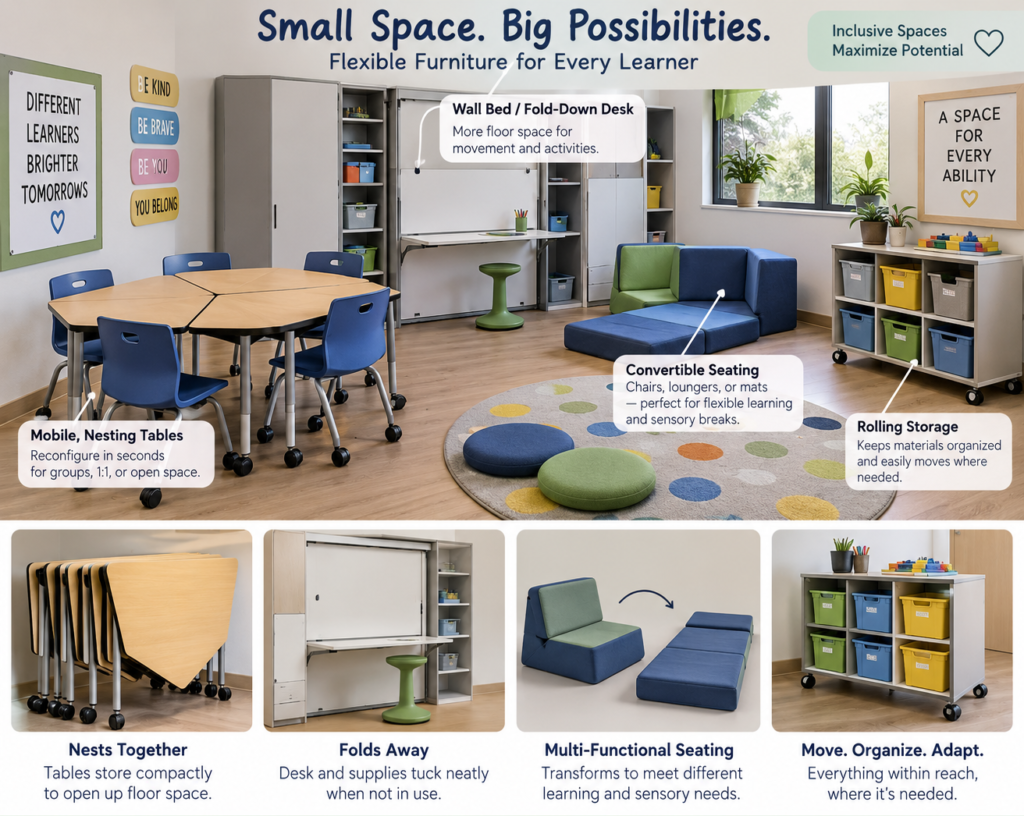
Foldable Tables: These can be set up during activities requiring more workspace and folded away when not in use, freeing up valuable floor space. For instance, during group projects or art activities, foldable tables provide ample workspace, and once the activity is over, they can be stored against the wall.
Storage Ottomans: These are perfect for creating additional seating while also providing storage. Use them to store sensory toys, extra supplies, or books. During story time, they double as comfortable seating for students, and during playtime, they house essential materials out of sight.
Adjustable Desks: Consider desks that can be adjusted in height and angle. These desks can be used for seated work, standing activities, or even as podiums for presentations. For example, during a science experiment, the desks can be raised to a comfortable height for students to stand and work, and then lowered for seated activities like writing or drawing.
2. Vertical Storage
When floor space is at a premium, look up! Utilizing vertical storage options can significantly increase your storage capacity without taking up more room.
A few examples of vertical storage:
Shelves: Install sturdy shelves along the walls to store books, teaching materials, and bins with manipulatives. Clear bins with labels can help keep items organized and easily accessible.
Hooks: Place hooks on the walls for items like student backpacks, headphones, or visual schedules. This keeps them off the floor and within reach.
Pegboards: Pegboards are versatile and can hold a variety of tools and supplies. Hang items like scissors, rulers, or even small baskets filled with frequently used items to keep your workspace tidy and efficient.
3. Foldable or Stackable Furniture
Flexibility is key when focusing on small special education classroom organization. Foldable or stackable furniture allows you to quickly adapt your space to different activities and needs.
A few examples foldable or stackable furniture:
Stackable Chairs: These can be stacked and stored when not in use, freeing up space for movement or other activities. For instance, during circle time, stack the chairs to create an open area for students to gather on the floor.
Foldable Desks: Similar to foldable tables, these desks can be set up for individual or group work and then folded away. This is especially useful for testing days or when you need to create a quiet work environment with minimal distractions.
4. Portable Stations
Creating mobile workstations or sensory bins can make your classroom more dynamic and adaptable. These stations can be easily moved around, allowing you to reconfigure your space as needed.
A few examples of portable stations:
Mobile Workstations: Use rolling carts to create mobile workstations that can house art supplies, science materials, or technology. These stations can be moved to different parts of the room depending on the activity.
Sensory Bins: Place sensory bins on rolling carts, allowing you to move them to different areas of the classroom. This flexibility ensures that sensory activities can happen anywhere in the room, providing students with varied and stimulating experiences.
5. Clear Zones
Designating specific areas for different activities helps keep the classroom organized and minimizes clutter. Clearly defined zones can also help students understand the purpose of each area and transition smoothly between activities.
A few examples of zones:
Reading Nook: Create a cozy reading nook with a rug, pillows, and a small bookshelf. This designated area encourages students to read and keeps all reading materials in one spot.
Art Station: Set up a dedicated art station with all necessary supplies. Use shelves or rolling carts to store materials, ensuring that everything is easy to find and put away.
High-Traffic Areas: Keep pathways and high-traffic areas clear by using storage solutions that keep items off the floor. For example, designate a specific area for students to store their personal belongings, keeping the main classroom space clutter-free.
By implementing these solutions, you can transform your limited space into a well-organized, functional, and inviting environment for your students. Remember, the key is to be creative and flexible with your space, ensuring that each area serves a purpose and can adapt to the needs of your students.
Wrapping It Up
Organizing a special education classroom with limited space may seem daunting, but with the right strategies, it’s entirely achievable. Multi-use furniture, vertical storage, foldable or stackable furniture, portable stations, and clear zones are all effective ways to maximize your space and create a conducive learning environment. Try incorporating these ideas into your small special education classroom organization, and you’ll likely find your space feels larger, more organized, and better suited to meet your students’ diverse needs.
Looking for more organization ideas? Check out these blogs…
Conquer Your Day: The Superpower of To Do Lists for Teachers
10 Productivity Secrets Every Special Educator Should Know




No Comments